
Investment Team
Link Organization
Yin Chao Director of the Economic Cooperation Service Center
correct
Precise market insights and efficient execution to help projects land quickly
Call
For Lease
Factory
Warehouse
Office Building
| Name | Floor Space | Unit Price | Floor Level | Height | |
|---|---|---|---|---|---|
 | |||||

For Sale
Factory
Warehouse
Office Building
| Name | Floor Space | Unit Price | Floor Level | Height | ||
|---|---|---|---|---|---|---|
| ||||||
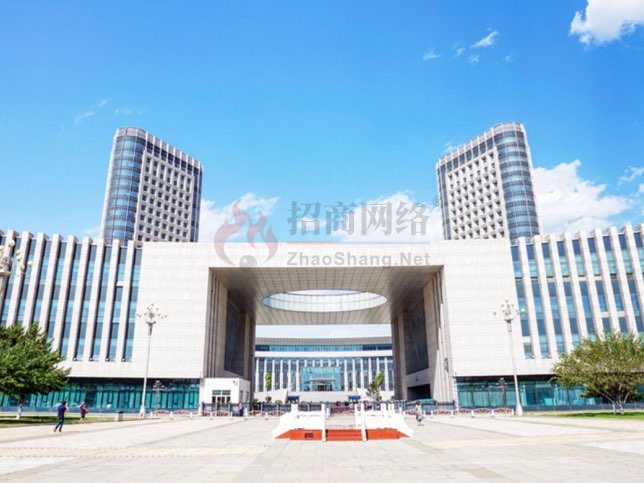
Government Overview
Haibowan District is one of the districts under the jurisdiction of Wuhai City in the Inner Mongolia Autonomous Region. It is located in the western part of the Inner Mongolia Autonomous Region and in the northeastern part of Wuhai City. Wuhai City is situated in the middle and upper reaches of the Yellow River, which flows through the city for 105 kilometers.Following the completion and impoundment of the Yellow River Haibowan Water Conservancy Project—a national key water conservancy project—"Wuhai Lake," covering an area of 118 square kilometers, was formed.Wuhai boasts a rich array of natural landscapes, including deserts, the Yellow River, lakes, grasslands, mountains, and wetlands. These elements combine to create a unique scenery where sand and water coexist harmoniously, mountains and water complement each other, the city lies on the lakeshore, and water flows through the city center. As a result, Wuhai is renowned as the “Pearl of the Yellow River” and the “Lake City in the Great Desert.”
Major Resource Supplies
Haibowan District possesses nearly 37 types of comprehensive mineral resources required for the energy, chemical, and building materials industries, with nearly 100 identified ore deposits and mineralized sites, making it a prime economic development area with significant potential for development and construction.
Coal: 2.497 billion metric tons; calorific value: 4,800–6,300 kcal; coking coal ash content: 6.9–30%; sulfur content: 0.8–3.85%;volatile matter: 24.69–33.29%; calorific value: 4,800–6,300 kcal
Limestone: 20 billion metric tons; average calcium oxide content: 50–54% (reserves are prospective reserves)
Quartz sand: 5 billion metric tons; silicon dioxide (SiO₂) ≥92.85%; iron(III) oxide (Fe₂O₃) ≤0.38%; aluminum oxide (Al₂O₃) ≤3.32%
Coal-based kaolin: 1.1 billion metric tons; alumina content: 35–39%
Refractory clay: 385 million metric tons; alumina ≥35%, iron(III) oxide ≤2%, refractoriness 1,700°C
Magnetite: 6.776 million metric tons
Gypsum: 13.298 million metric tons; calcium sulfate dihydrate 63.72–72.57%, silicon dioxide 12.91–15.75%
Hai'erwan District in Wuhai City is rich in water resources, with ample supplies for both industrial and domestic use. The Yellow River Hai'erwan Water Conservancy Project has a reservoir capacity of 487 million cubic meters. The district’s groundwater resources total 50.72 million cubic meters.
Haibowan District has established 36 power generation enterprises with a total installed capacity of 5.0585 million kilowatts. Of this, traditional installed capacity accounts for 4.138 million kilowatts, representing 81% of the city’s total installed power capacity. This includes five grid-connected power plants with an installed capacity of 2.52 million kilowatts;9 on-site thermal power plants with an installed capacity of 1.208 million kilowatts; and 8 resource-recovery power plants with an installed capacity of 410,000 kilowatts.Renewable energy capacity stands at 94.05万千瓦, accounting for 19% of the city’s total installed power capacity. This includes one biomass power plant with a capacity of 3万千瓦; one hydropower station with a capacity of 9万千瓦; and 20 wind and solar power plants with a combined capacity of 82.05万千瓦.
Major Resource Supplies
Haibowan District possesses nearly 37 types of comprehensive mineral resources required for the energy, chemical, and building materials industries, with nearly 100 identified ore deposits and mineralized sites, making it a prime economic development area with significant potential for development and construction.
Coal: 2.497 billion metric tons; calorific value: 4,800–6,300 kcal; coking coal ash content: 6.9–30%; sulfur content: 0.8–3.85%;volatile matter: 24.69–33.29%; calorific value: 4,800–6,300 kcal
Limestone: 20 billion metric tons; average calcium oxide content: 50–54% (reserves are prospective reserves)
Quartz sand: 5 billion metric tons; silicon dioxide (SiO₂) ≥92.85%; iron(III) oxide (Fe₂O₃) ≤0.38%; aluminum oxide (Al₂O₃) ≤3.32%
Coal-based kaolin: 1.1 billion metric tons; alumina content: 35–39%
Refractory clay: 385 million metric tons; alumina ≥35%, iron(III) oxide ≤2%, refractoriness 1,700°C
Magnetite: 6.776 million metric tons
Gypsum: 13.298 million metric tons; calcium sulfate dihydrate 63.72–72.57%, silicon dioxide 12.91–15.75%
Hai'erwan District in Wuhai City is rich in water resources, with ample supplies for both industrial and domestic use. The Yellow River Hai'erwan Water Conservancy Project has a reservoir capacity of 487 million cubic meters. The district’s groundwater resources total 50.72 million cubic meters.
Haibowan District has established 36 power generation enterprises with a total installed capacity of 5.0585 million kilowatts. Of this, traditional installed capacity accounts for 4.138 million kilowatts, representing 81% of the city’s total installed power capacity. This includes five grid-connected power plants with an installed capacity of 2.52 million kilowatts;9 on-site thermal power plants with an installed capacity of 1.208 million kilowatts; and 8 resource-recovery power plants with an installed capacity of 410,000 kilowatts.Renewable energy capacity stands at 94.05万千瓦, accounting for 19% of the city’s total installed power capacity. This includes one biomass power plant with a capacity of 3万千瓦; one hydropower station with a capacity of 9万千瓦; and 20 wind and solar power plants with a combined capacity of 82.05万千瓦.
Transportation Location
Return to location
- Highway
- Port
- Airport
- Logistics
- Life
region
trade
medical
school
travel