
Investment Team
Link Organization
Wang Yungang Deputy Director of the Office of the Party Committee and the People's Congress
Correct
Familiar with market dynamics, good at digging out quality projects, and promote cooperation with professional services.
Call
For Lease
Factory
Warehouse
Office Building
| Name | Floor Space | Unit Price | Floor Level | Height | |
|---|---|---|---|---|---|
 | |||||

For Sale
Factory
Warehouse
Office Building
| Name | Floor Space | Unit Price | Floor Level | Height | ||
|---|---|---|---|---|---|---|
| ||||||
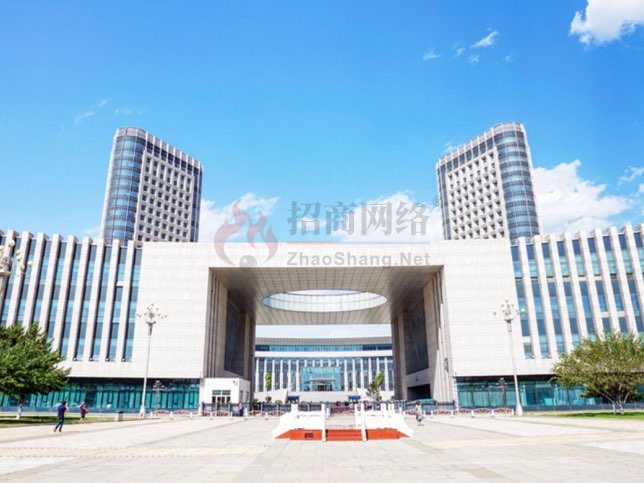
Government Overview
Changlu Subdistrict covers an area of 90.49 square kilometers, of which the Jiangbei New Materials Technology Park (37.1 square kilometers) and the Hub Office (28.3 square kilometers) are located within Changlu. The subdistrict administers five communities and five administrative villages, with a registered population of 58,400. Among them, approximately 30,000 residents have been relocated to Dachang Subdistrict, Getao Subdistrict, and Xiongzhou Subdistrict in Liuhe District.
Changlu’s profound cultural heritage reflects its long history. In 2010, it was designated as a “Hometown of Distinctive Culture in Jiangsu Province.” Since Bodhidharma crossed the Yangtze River on a broken reed, and through a thousand years of change, culture has left the deepest imprint on Changlu.The subdistrict currently boasts five provincial-level intangible cultural heritage protection projects: the Bodhidharma Legend, Liuzuo Percussion Music, Wanbei Small Horse Lanterns, Fangxiang "Ren Zoubei," and the Craft of Making Nanjing Salted Duck and Brined Duck. It also features two municipal-level intangible cultural heritage protection projects—the Changlu Dragon Lanterns and the Legend of Huangtiandang—along with 17 district-level intangible cultural heritage protection projects."Liu Zuo Wind and Percussion Music" is renowned both at home and abroad. In 2011, it won the Shan Hua Award, the highest national prize for folk arts; in 2016, it was invited to tour several European countries; and in 2018, it performed at China’s first National Farmers’ Harvest Festival.
Convenient transportation infrastructure forms the lifeblood of Changlu’s development. In ancient times, Changlu served as a historic ferry crossing where the north and south of the country met, acting as a vital transportation hub connecting the regions north and south of the Yangtze River. Today, Changlu is bordered by the Chu River to the east and the Yangtze River to the south, with a dense network of waterways crisscrossing the area,with crisscrossing roads. The Xiba Port Area of Nanjing Port—the only direct river-to-sea port capable of accommodating 50,000-ton vessels—is situated within its territory. Jiangbei Avenue, the Yangtze River Expressway, and Provincial Highway S501 converge and intersect here. The Second and Fourth Yangtze River Bridges, the Nanjing-Lianyungang and Nanjing-Tongling Expressways, and the Nanjing-Qidong Railway encircle and extend through the area, while the Nanjing-Tianjin Intercity Rail runs directly through it. Construction of the Xianxin Road Yangtze River Crossing is in full swing.
These unique geographical advantages underpin Changlu’s development plans. The subdistrict is adjacent to major enterprises such as Yangzi Petrochemical and Yangzi BASF, and lies across the river from the Nanjing Port Container Terminal, offering an exceptional investment environment. Changlu Subdistrict serves as the strategic hinterland for the future development of the New District’s chemical industry and hub economy, playing a vital role in industrial advancement.
Changlu’s profound cultural heritage reflects its long history. In 2010, it was designated as a “Hometown of Distinctive Culture in Jiangsu Province.” Since Bodhidharma crossed the Yangtze River on a broken reed, and through a thousand years of change, culture has left the deepest imprint on Changlu.The subdistrict currently boasts five provincial-level intangible cultural heritage protection projects: the Bodhidharma Legend, Liuzuo Percussion Music, Wanbei Small Horse Lanterns, Fangxiang "Ren Zoubei," and the Craft of Making Nanjing Salted Duck and Brined Duck. It also features two municipal-level intangible cultural heritage protection projects—the Changlu Dragon Lanterns and the Legend of Huangtiandang—along with 17 district-level intangible cultural heritage protection projects."Liu Zuo Wind and Percussion Music" is renowned both at home and abroad. In 2011, it won the Shan Hua Award, the highest national prize for folk arts; in 2016, it was invited to tour several European countries; and in 2018, it performed at China’s first National Farmers’ Harvest Festival.
Convenient transportation infrastructure forms the lifeblood of Changlu’s development. In ancient times, Changlu served as a historic ferry crossing where the north and south of the country met, acting as a vital transportation hub connecting the regions north and south of the Yangtze River. Today, Changlu is bordered by the Chu River to the east and the Yangtze River to the south, with a dense network of waterways crisscrossing the area,with crisscrossing roads. The Xiba Port Area of Nanjing Port—the only direct river-to-sea port capable of accommodating 50,000-ton vessels—is situated within its territory. Jiangbei Avenue, the Yangtze River Expressway, and Provincial Highway S501 converge and intersect here. The Second and Fourth Yangtze River Bridges, the Nanjing-Lianyungang and Nanjing-Tongling Expressways, and the Nanjing-Qidong Railway encircle and extend through the area, while the Nanjing-Tianjin Intercity Rail runs directly through it. Construction of the Xianxin Road Yangtze River Crossing is in full swing.
These unique geographical advantages underpin Changlu’s development plans. The subdistrict is adjacent to major enterprises such as Yangzi Petrochemical and Yangzi BASF, and lies across the river from the Nanjing Port Container Terminal, offering an exceptional investment environment. Changlu Subdistrict serves as the strategic hinterland for the future development of the New District’s chemical industry and hub economy, playing a vital role in industrial advancement.
Transportation Location
Return to location
- Highway
- Port
- Airport
- Logistics
- Life
region
trade
medical
school
travel