
Investment Team
Binding Unit
Huang Wang Director
correct
Precise market insights and efficient execution to help projects land quickly
Call
For Lease
Factory
Warehouse
Office Building
| Name | Floor Space | Unit Price | Floor Level | Height | |
|---|---|---|---|---|---|
 | |||||

For Sale
Factory
Warehouse
Office Building
| Name | Floor Space | Unit Price | Floor Level | Height | ||
|---|---|---|---|---|---|---|
| ||||||
Government Overview
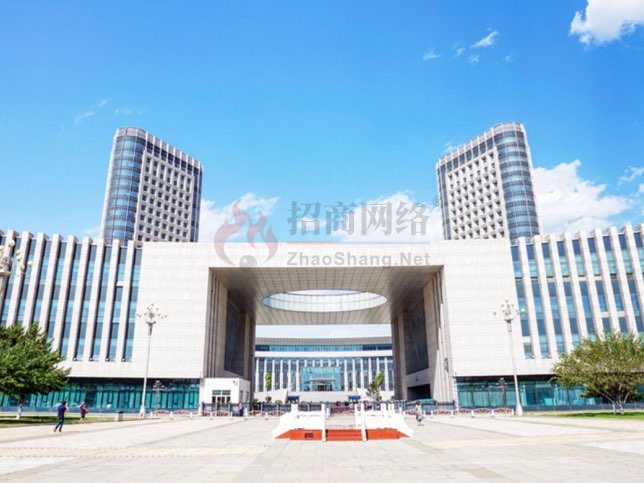
Fengdu was historically known as the secondary capital of the Ba Kingdom. It was established as a county in 90 AD, and in 1958, Premier Zhou Enlai officially named it “Fengdu.” The county administers 30 towns and townships (subdistricts),with a registered population of 784,000 and an area of 2,901 square kilometers. It is a county known for its distinctive tourism, a key resettlement county, and a former national-level poverty-stricken county. It is also among the first batch of counties designated for opening to the outside world, as well as a National Model Tourist District, one of the Top Ten National Ecological Leisure Tourism Cities, a National Garden County, and a National Hygienic County. It has five main characteristics:
(1) Fengdu is situated at the geographical center of Chongqing and in the heart of the Three Gorges Reservoir Area. It serves as a key node city in the Chengdu-Chongqing Dual-City Economic Circle and a connecting point for the “One Zone, Two Clusters” strategy. It is just a 1.5-hour drive from downtown Chongqing, Wanzhou District, and Qianjiang District. With 47 kilometers of Yangtze River shoreline, it boasts a deep-water port on the Yangtze’s “Golden Waterway” capable of accommodating cargo ships of 5,000 tons or more year-round.
(2) Fengdu serves as a “bookmark” of Chongqing’s history and culture. It is renowned worldwide for its 5,000-year history as the “Phoenix City,” 2,000 years as a county seat, and 1,000 years as the “Ghost City.” The unearthed “Ba-Yu Divine Bird” is the crown jewel of the Three Gorges Museum. The city boasts 55,000 movable cultural relics and 1,104 immovable cultural heritage sites, including one national-level intangible cultural heritage item and 16 municipal-level intangible cultural heritage items.
(3) Fengdu is Chongqing’s “green battery.” It has built a clean energy installed capacity of 710,000 kilowatts, generating approximately 1.8 billion kilowatt-hours of electricity annually and saving 558,000 tons of standard coal. Of this, wind power accounts for 430,000 kilowatts, representing one-fifth of the city’s total.Work is accelerating on the city’s largest pumped-storage hydroelectric project, with an installed capacity of 1.4 million kilowatts. Concurrently, wind power projects with a capacity of 130,000 kilowatts and photovoltaic projects with a capacity of 110,000 kilowatts have been launched. Upon completion, these projects will generate 3 billion kilowatt-hours of electricity annually, saving 930,000 tons of standard coal.
(4) Fengdu is the “rooftop garden” of Chongqing’s central urban area. It possesses over 10% of the city’s most valuable high-altitude tourism resources located above 1,000 meters in elevation. The district is home to four 4A-level scenic areas—including Mingshan, Xueyudong, and Jiuchongtian—as well as the Nantianhu National Tourism Resort. It also features high-altitude tourism resources such as the Sanfu Forest Farm, Xueyushan, Taiping Yunhai, and the Ancient Salt-Horse Trail.
(5) Fengdu serves as the “vegetable basket” for Chongqing’s central urban area. Fengdu maintains an annual beef cattle inventory of 160,000 head and a slaughter output of 80,000 head, ranking first in the city for both inventory and slaughter volume; its annual poultry slaughter output reaches 10.54 million birds, ranking fifth in the city; and it produces 500 million eggs annually, with 360 million sold to the central urban area, accounting for approximately 20% of the central urban area’s annual consumption.
(1) Fengdu is situated at the geographical center of Chongqing and in the heart of the Three Gorges Reservoir Area. It serves as a key node city in the Chengdu-Chongqing Dual-City Economic Circle and a connecting point for the “One Zone, Two Clusters” strategy. It is just a 1.5-hour drive from downtown Chongqing, Wanzhou District, and Qianjiang District. With 47 kilometers of Yangtze River shoreline, it boasts a deep-water port on the Yangtze’s “Golden Waterway” capable of accommodating cargo ships of 5,000 tons or more year-round.
(2) Fengdu serves as a “bookmark” of Chongqing’s history and culture. It is renowned worldwide for its 5,000-year history as the “Phoenix City,” 2,000 years as a county seat, and 1,000 years as the “Ghost City.” The unearthed “Ba-Yu Divine Bird” is the crown jewel of the Three Gorges Museum. The city boasts 55,000 movable cultural relics and 1,104 immovable cultural heritage sites, including one national-level intangible cultural heritage item and 16 municipal-level intangible cultural heritage items.
(3) Fengdu is Chongqing’s “green battery.” It has built a clean energy installed capacity of 710,000 kilowatts, generating approximately 1.8 billion kilowatt-hours of electricity annually and saving 558,000 tons of standard coal. Of this, wind power accounts for 430,000 kilowatts, representing one-fifth of the city’s total.Work is accelerating on the city’s largest pumped-storage hydroelectric project, with an installed capacity of 1.4 million kilowatts. Concurrently, wind power projects with a capacity of 130,000 kilowatts and photovoltaic projects with a capacity of 110,000 kilowatts have been launched. Upon completion, these projects will generate 3 billion kilowatt-hours of electricity annually, saving 930,000 tons of standard coal.
(4) Fengdu is the “rooftop garden” of Chongqing’s central urban area. It possesses over 10% of the city’s most valuable high-altitude tourism resources located above 1,000 meters in elevation. The district is home to four 4A-level scenic areas—including Mingshan, Xueyudong, and Jiuchongtian—as well as the Nantianhu National Tourism Resort. It also features high-altitude tourism resources such as the Sanfu Forest Farm, Xueyushan, Taiping Yunhai, and the Ancient Salt-Horse Trail.
(5) Fengdu serves as the “vegetable basket” for Chongqing’s central urban area. Fengdu maintains an annual beef cattle inventory of 160,000 head and a slaughter output of 80,000 head, ranking first in the city for both inventory and slaughter volume; its annual poultry slaughter output reaches 10.54 million birds, ranking fifth in the city; and it produces 500 million eggs annually, with 360 million sold to the central urban area, accounting for approximately 20% of the central urban area’s annual consumption.
Transportation Location
Return to location
- Highway
- Port
- Airport
- Logistics
- Life
region
trade
medical
school
travel